If you’re a small business owner, startup founder, or someone who just loves editing photos without spending a fortune, PicsArt is a name that probably comes to mind. It’s widely used, powerful, and creative, but sometimes its free version feels limited, or the ads get annoying, or you want something more lightweight (or more powerful, depending on your needs). That’s why knowing good PicsArt alternatives is super useful.
I’ve tried a variety of apps and tools, and here are some of the best free options out there right now. These give you filters, editing tools, layers, and more, without forcing you into a pricey subscription. Think of this as friendly advice from someone who’s been there, experimenting late at night on client graphics and social media visuals.
Why Look for Alternatives to PicsArt?
- Ads & Freemium Frustration: Free PicsArt has ads, and its premium plan can feel steep.
- Different Feature Focus: Maybe you don’t need all the collage + sticker stuff, just a strong photo editor.
- Performance: On some devices, PicsArt can lag, or it’s just overkill for quick edits.
- More Control: Some alternatives give you more “pro-style” editing (curves, layers, RAW) than PicsArt’s mobile design.
- Web-Based Options: You might want to edit on a laptop or desktop, not just on your phone.
What I Looked For in These Alternatives
- Offer real, usable free features (not just a 7-day trial)
- Provide good filter variety, tween artistic filters and practical ones
- Include basic editing tools: crop, brightness, contrast, plus some more advanced options
- Support mobile and/or web, flexible for any workflow
- Stay relatively easy to use, without overwhelming beginners
Top Free PicsArt Alternatives
1. Snapseed
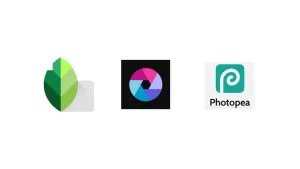
Perfect for: Powerful mobile edits, precision work. Snapseed is one of my favorite “go-to” free editors. Developed by Google, it offers about 29 tools and filters, things like Healing, Brush, Structure, HDR, and more.
Why it’s great:
- Fully free, no forced subscription.
- Supports RAW editing, which is rare in free mobile apps.
- Precise control over edits: you can selectively adjust brightness, saturation, and shadows using its “Stacks” system.
- Clean interface, not bloated with sticker packs or collages (unless that’s your thing), which means faster workflows.
Real-World Use:
If you’re taking photos of your product or working on social media graphics, Snapseed lets you fine-tune color and lighting so your images look polished. I’ve used it to clean up background distractions and tweak tones for Instagram posts, it’s reliable and fast.
Limitations:
It’s more of a photo editor than a design + collage tool. So, if you need things like sticker libraries or text-heavy layouts, Snapseed is less fully featured than PicsArt in that sense.
2. Pixlr (Web & Mobile)
Perfect for: Web-based editing + creative overlays. Pixlr offers two main versions: Pixlr X (lighter, for quick edits) and Pixlr E (more advanced editing).
Why it’s great:
- Browser-based: works right in your browser, no installation required.
- Strong layering support: allows blending, transparency, more like a “real” editor than a mobile app.
- AI-powered tools: background removal, object erasing, and one-click corrections.
- Templates and filters: you can apply overlays, double exposure effects, text, and more.
Real-World Use:
Say you run a small e-commerce brand and need to make banner images, Instagram stories, or product photos. Pixlr in a web browser makes it easy to layer design elements, clean up product shots, and export polished visuals without needing Photoshop.
Limitations:
The free version shows ads, and some more advanced filters/tools may require a paid plan. But the free tier is still very capable for frequent use.
3. Photopea
Perfect for: Pro-level editing, desktop style. Photopea is a browser-based advanced photo editor. It’s like having a lightweight version of Photoshop in your browser.
Why it’s great:
- Runs fully in the browser; no installation needed.
- Supports PSD files, vector graphics, smart objects, just like Photoshop.
- Advanced layer tools, masks, text, and brushes: you get serious editing power.
- Free with ads; you can pay to remove ads, but basic editing is fully usable without payment.
Real-World Use:
If you’re a founder working on brand graphics, pitch decks, or marketing materials, Photopea can handle editing PSD templates, designing social media graphics, or touch-ups on promotional images. It’s very precise and flexible.
Limitations:
Because it’s so powerful, there’s a steeper learning curve than Snapseed or Pixlr. Also, the browser-based UI means it may lag slightly for very heavy files or large layers.
4. GIMP
Perfect for: Open-source, desktop-level work. GIMP (the GNU Image Manipulation Program) is a classic open-source graphics editor.
Why it’s great:
- Totally free and open-source, no hidden paywalls.
- Supports complex tasks: layers, masks, brushes, and scripting.
- Cross-platform: available on Windows, macOS, and Linux.
- Very customizable: since it’s open-source, you can install plugins or tweak it to suit your workflow.
Real-World Use:
Imagine you’re designing promotional posters, or you’re editing multiple high-resolution product photos. GIMP gives you the control to do everything from retouching to compositing, with no software license costs.
Limitations:
The UI feels dated to some people, and it’s not as mobile-friendly. If you’re mainly editing on your phone, this might not be your daily pick.
5. YouCam Perfect
Perfect for: AI-enhanced mobile edits, beauty retouching. YouCam Perfect offers a ton of features similar to PicsArt, but it’s focused more on automated edits, beauty tools, and creative filters.
Why it’s great:
- Object removal: can remove people or unwanted items in your photo with AI help.
- Background remover: change your photo background in a few taps.
- Beautifying tools: face shaper, blemish remover, body tuner, useful if you edit selfies or fashion images.
- Animation features: adds animated effects or light leaks, which feels a bit like the creative vibe of PicsArt.
Real-World Use:
If you’re taking social media photos or product selfies, YouCam Perfect helps you clean up backgrounds and quickly enhance portraits. It’s very helpful when you want polished, shareable images without spending hours editing.
Limitations:
Some features can feel “auto-magical,” which is great for speed but less ideal if you want manual fine control. Also, more advanced filters or animations might require in-app purchases.
6. Prisma
Perfect for: Artistic, stylized photo effects. Prisma transforms your photos into artwork using neural networks and AI. Its filters are more “paintings and art” than standard photo tweaks.
Why it’s great:
- Unique artistic filters: make your photos look like paintings, sketches, or creative art styles.
- Simple to use: pick a style, apply it, and tweak strength.
- Great for social media: if you want eye-catching, styled visuals, Prisma stands out.
Real-World Use:
Suppose your startup is creative or design-based, you might use Prisma to convert product shots into stylized marketing visuals or social media posts that feel artistic instead of purely photographic.
Limitations:
Because it’s focused on art styles, it’s not ideal for fine photo corrections (like removing blemishes or adjusting lighting precisely). Also, some of the more complex filters may require in-app upgrades.
7. Sumo Paint
Perfect for: Browser art + sketching + casual design. Sumo Paint is a web-based drawing and painting app that can also handle photo editing.
Why it’s great:
- Layer-based editing like a simplified Photoshop.
- Classic paint + draw tools: ideal if you want to sketch, doodle, or illustrate on top of photos.
- Filters and image adjustments: includes color balancing, blurring, sharpening, and more.
- Web-based, so you can run it in any compatible browser.
Real-World Use:
If your brand needs custom photo + illustration combos, maybe you’re creating memes, marketing visuals, or digital art for social media, Sumo Paint lets you mix freehand drawing with photo editing in one place.
Limitations:
It’s less optimized for heavy photo editing compared to Snapseed or GIMP. Also, performance depends on browser capability, so very large images may feel slow.
8. RawTherapee
Perfect for: RAW photo processing, serious photo quality. RawTherapee is a free, open-source application built specifically for processing RAW photos.
Why it’s great:
- Non-destructive editing: you can make adjustments without destroying the original photo.
- Advanced controls: exposure, color, detail, noise reduction, and more.
- Cross-platform: works on Windows, macOS, and Linux.
- Free and open source, so no licensing costs.
Real-World Use:
If you shoot product photos, or you’re working with a photographer for your business, RawTherapee gives you pro-level control to maximize image quality. You can pull detail out of shadows, correct lens distortions, and make precise color corrections.
Limitations:
It’s not designed for fun filters or stickers; its strength is in serious photo development. It’s also more complex, so there’s a learning curve.
9. Fotografix
Perfect for: Lightweight desktop edits, low-resource systems. Fotografix is a minimal, free graphics editor for Windows.
Why it’s great:
- Very lightweight: runs on older or less powerful PCs without lag.
- Basic but useful tools: includes layers, color adjustments, and filters.
- Portable: easy to carry or use on different machines.
Real-World Use:
If you have a laptop for day-to-day business tasks and occasionally need to tweak images, Fotografix gives you just enough power without hogging your system. It’s especially useful for simple edits or color corrections when you don’t need full-blown software.
Limitations:
Not rich in creative filters or AI tools. Compared to PicsArt, it’s more “workhorse editor” than “creative playground.”
How to Choose the Right Alternative for You
- Define Your Goals
- Are you mostly doing social media graphics? (Try Snapseed, Pixlr)
- Do you need to edit RAW product photography? (Try RawTherapee or GIMP)
- Do you want stylized, artistic images? (Try Prisma)
- Do you want to draw + design + paint? (Try Sumo Paint)
- Think About Platform
- Want to edit on a computer? Photopea, GIMP, and RawTherapee are strong.
- Prefer working on mobile phone or tablet? Snapseed or YouCam Perfect fit well.
- Need web-based access (no install)? Go for Photopea or Pixlr.
- Balance Power vs Simplicity
- Some tools (GIMP, RawTherapee) are powerful but complex.
- Others (Snapseed, YouCam Perfect) are simpler and faster, but not as “pro”.
- Collaboration & Sharing
- For creating shareable content (social media posts, collages), go for Pixlr or YouCam.
- For design files (layered PSDs or advanced edits), Photopea is great because you can export in standard design formats.
- System Resources
- If your device is light (budget laptop or older PC), lean into lightweight tools like Fotografix.
- If you have a modern computer, more advanced editors (GIMP, RawTherapee) are totally viable.
My Recommendation
- Use Snapseed for quick edits on mobile, it’s powerful, free, and reliable.
- Use Pixlr when I want to quickly design social media posts or mix in overlays, all from my browser.
- Use Photopea when designing pitch-deck graphics, layered images, or preparing marketing visuals.
- Occasionally, pull in RawTherapee if I need to take high-quality photos and correct them in a non-destructive, professional way.
- Use Prisma when I want to make creative, artistic versions of images for blog graphics, social posts, or fun visuals.
Wrap-Up: Why These Alternatives Matter
PicsArt is fantastic for what it does, but it’s not the only game in town, and for many small business owners or startup founders, some of these alternatives might make more sense. They offer:
- Strong free editing tools, with less dependency on a paid plan
- More flexibility (web-based, desktop, or mobile)
- Access to more “pro-level” editing if you need it
- Reduced ad frustration or subscription fatigue
By choosing the right editor for your needs, you can make better visuals without paying more than you should. And that saves you money, time, and stress, all of which matter when you’re building something.